For countries like Iran, which have endured coups, sanctions, and decades of geopolitical pressure, the idea that outside powers could “fix” internal problems is not only unrealistic but deeply dangerous. Liberation imposed from the outside is not liberation at all; it is a reshaping of a nation according to someone else’s interests. And the people who pay the price are almost always civilians, not the political elites who sparked the conflict in the first place.
War Always Hits the Innocent
War does not discriminate. It does not pause to ask whether the person beneath the rubble supported the government or opposed it. It does not spare children, the elderly, or those who simply want to live quietly and raise their families. This is why the idea of inviting foreign armies to “solve” domestic political problems is so alarming.
We have seen the consequences in Afghanistan, Iraq, Libya, and Syria. Each intervention was justified with promises of democracy, stability, or human rights. Each left behind devastation, displacement, and long-term instability. The pattern is not an accident—it is the predictable outcome of using military force to reshape societies from the outside.
When bombs fall, they fall on neighborhoods, not on ideologies. When sanctions tighten, they suffocate ordinary people long before they touch the ruling class. This is why the call for foreign intervention, even when born from frustration or desperation, ultimately leads to more suffering for the very people one hopes to protect.
Power Politics, Not Democracy
It is important to be honest about the motives of powerful states. Governments do not send troops, drones, or sanctions out of compassion. They act based on strategic, economic, and geopolitical calculations. The Middle East has long been a stage for these competing interests, and Iran sits at the center of many of them.
American foreign policy has often prioritized access to resources, regional influence, and military positioning over democratic outcomes. Israel, too, has its own strategic concerns, and a weakened or fragmented Iran would serve those interests more than a strong, independent one. These realities do not require moral judgment—they are simply how states behave.
To imagine that such powers would intervene in Iran purely to help its people is to overlook decades of evidence. Installing a monarchy, backing a puppet regime, or engineering a political transition from abroad would not empower Iranians. It would undermine their sovereignty and deepen internal divisions. True democracy cannot be imported; it must be built from within.
My Ties to Iran
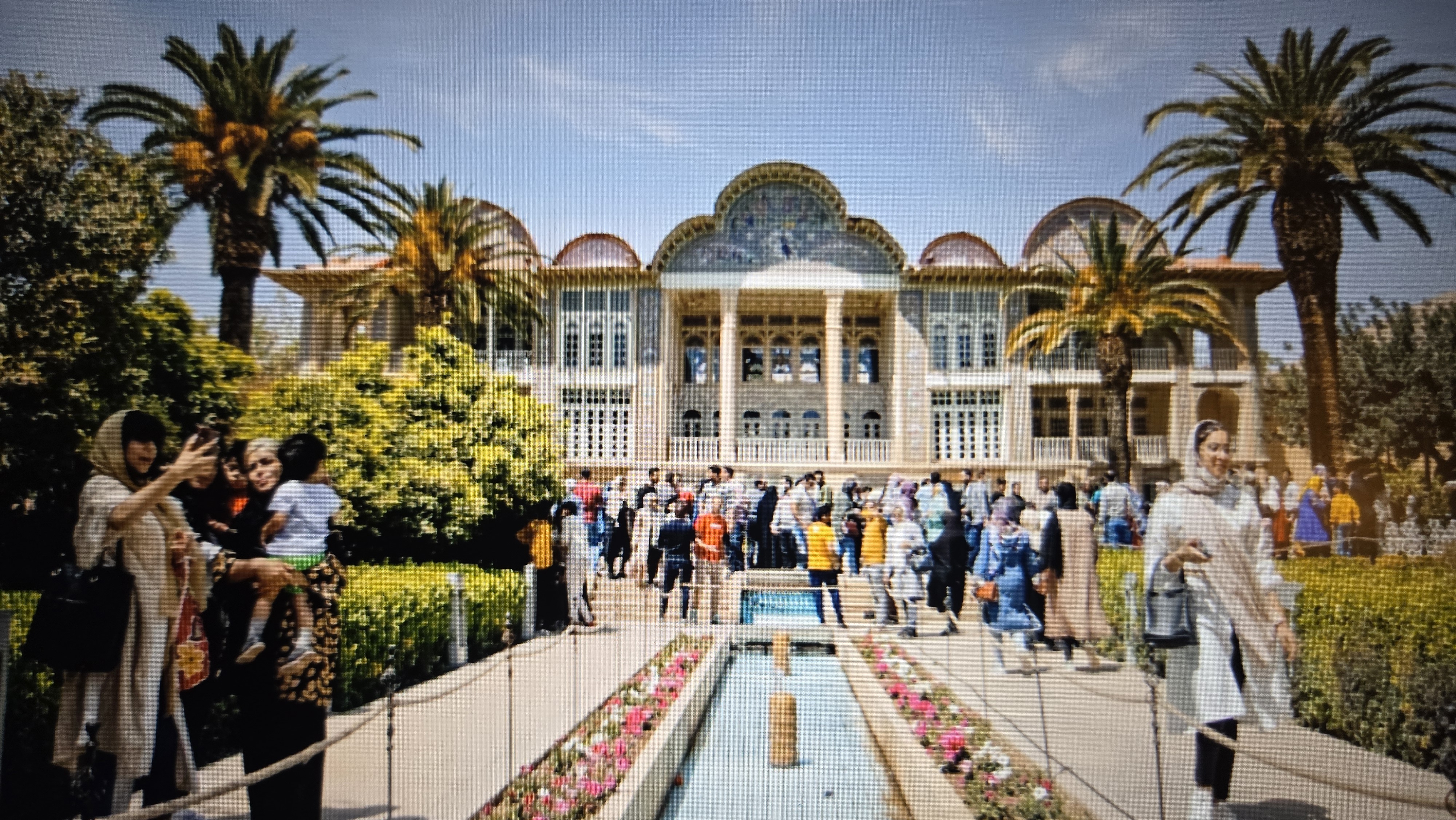
My perspective on Iran is shaped not only by political analysis but by lived experience. I have spent extended periods of time in Iran, walking its streets, sharing meals with people, visiting public and private spaces, and witnessing the rhythms of daily life in Iran. My husband studied for years at Shiraz University, immersing himself in the culture and forming friendships that have lasted decades. My uncle, a doctor, moved to Tehran during the Iran‑Iraq war in 1980. He built a life there, married an Iranian woman, and raised children who know no other home. His grandchildren are growing up in the same neighborhoods where he once treated patients during some of the country’s most difficult years.
Since the recent conflict began, communication has been sporadic. News comes in fragments—an update from a relative, a message relayed through a friend in India. The uncertainty is heavy. But it also reminds me that Iran is not an abstract political entity. It is a place filled with people I love, people who deserve peace and stability, not more violence imposed from the outside.
A Nation Split at Home
One of the most painful realities in Iran today is the deep divide within families. I have seen siblings who no longer speak because of political differences. Parents and children who cannot agree on what the future should look like. Friends who avoid certain topics to preserve their relationships. These divisions are not unique to Iran—many societies facing political turmoil experience similar fractures. But they are especially heartbreaking in a culture where family bonds are traditionally strong and central to daily life. Foreign intervention would not heal these wounds. It would deepen them. When a nation is already struggling with internal disagreements, external pressure or military involvement tends to push people further apart, not bring them together. Healing must come from dialogue, patience, and internal reform—not from the shock of outside force.
Rage Isn’t a Roadmap
Many diaspora Iranians are angry and frustrated with the Islamic regime. Their anger is understandable. When people feel oppressed, unheard, or trapped, rage becomes a natural response. But anger alone cannot guide a nation toward a better future. It can motivate action, but it cannot design solutions. Inviting foreign armies or foreign-backed leaders to take control is not a strategy—it is a reaction born from exhaustion and despair. And it is a reaction that history shows will lead to outcomes far worse than the problems it seeks to solve.
Real change requires vision, unity, and the courage to build something new from within. It requires acknowledging the complexity of the situation, not simplifying it into a choice between two extremes. And it requires resisting the temptation to believe that someone else’s military can deliver freedom.
Choosing Peace Over Destruction
At the heart of my perspective is a simple belief: people deserve peace. They deserve the chance to build their own future without bombs falling on their homes or foreign powers deciding their fate. I do not believe in antagonistic approaches to complex issues. I believe in empathy, in dialogue, and in the possibility of change that does not rely on violence. My hope is that Iran—and every nation caught in the crossfire of geopolitical ambitions—finds a path toward justice, stability, and prosperity that comes from within, not from the barrel of someone else’s gun. The world has seen enough wars disguised as liberation. What we need now is the courage to imagine solutions rooted in humanity rather than destruction.


Leave a Reply